CASE STUDY · ALCON CHINA · WITH MCKINSEY & COMPANY
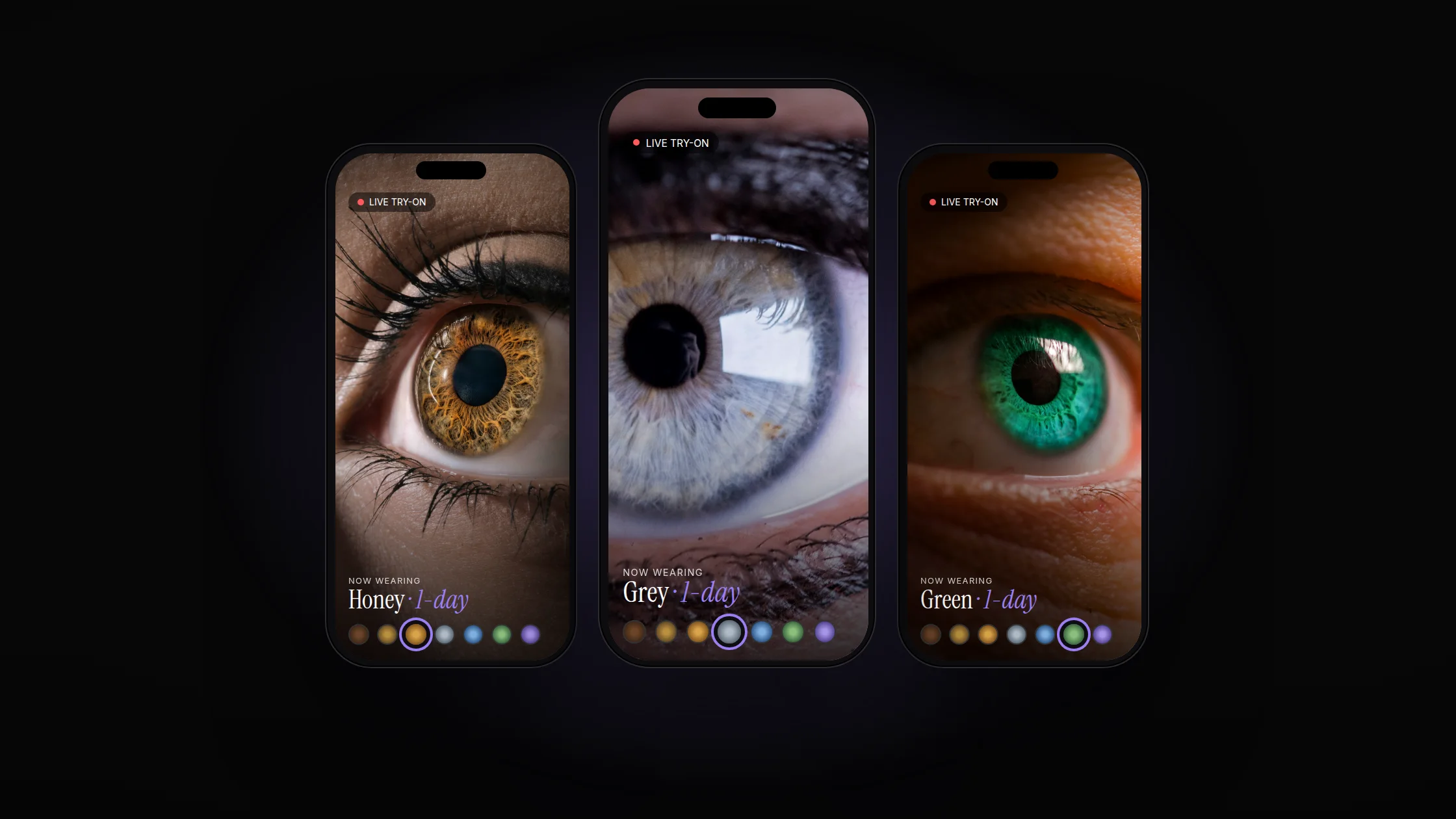
Due to NDA, the images on this page are illustrations to explain the idea, not the final product. Eye photography from Unsplash.
ROLE
UX & product designer
COMPANY
Alcon China, with McKinsey & Company
TIMELINE
6 months
FOCUS
AR try-on, in-store experience, product strategy
Alcon’s share of the coloured lens market after full rollout
sales lift in the five pilot stores
pilot stores in China before rolling out to every outlet
ways to try: in-store iPad first, then shoppers’ own phones
THE PROBLEM
No trial
Lenses are single use, so nobody can test a colour before paying for it.
A crowded shelf
Established brands already owned the category. A new entrant needed a real reason to be chosen.
Buying on faith
Box photos and swatches can’t show how a colour looks with your own eyes and skin.
RESEARCH
A beauty purchase
OBSERVATION
Coloured lenses were one of the fastest-growing parts of China’s contact lens market, bought for looks, not vision.
DESIGN IMPLICATION
It had to feel like trying on makeup, not visiting an optician.
A catalogue isn’t a reason
OBSERVATION
The first proposal was an app that listed every colour, like a brochure. It showed the range but did nothing about the guess.
DESIGN IMPLICATION
Listing colours wasn’t enough. People needed to see the colour on themselves.
Try-on already worked
OBSERVATION
Eyewear retailers like Lenskart in India had made virtual try-on part of how people shop for frames.
DESIGN IMPLICATION
Apply the same logic to lenses and let the shopper’s face be the preview.
HOW WE BUILT IT
01
Start in the store
iPads at the counter came first, where light and set-up were controlled and staff could help.
02
Make it about you
The shopper’s own eyes are the preview, with every colour one tap away.
03
Then go to the phone
Once it worked in stores, we brought it to phones and solved dim rooms by turning the screen into a ring light.
THE DESIGN
WHAT IT DOES
An iPad at the counter shows the shopper’s face with the lens colour applied live.
WHY IT’S DESIGNED THIS WAY
The store was the safest place to start: good light, a steady device and a staff member nearby.
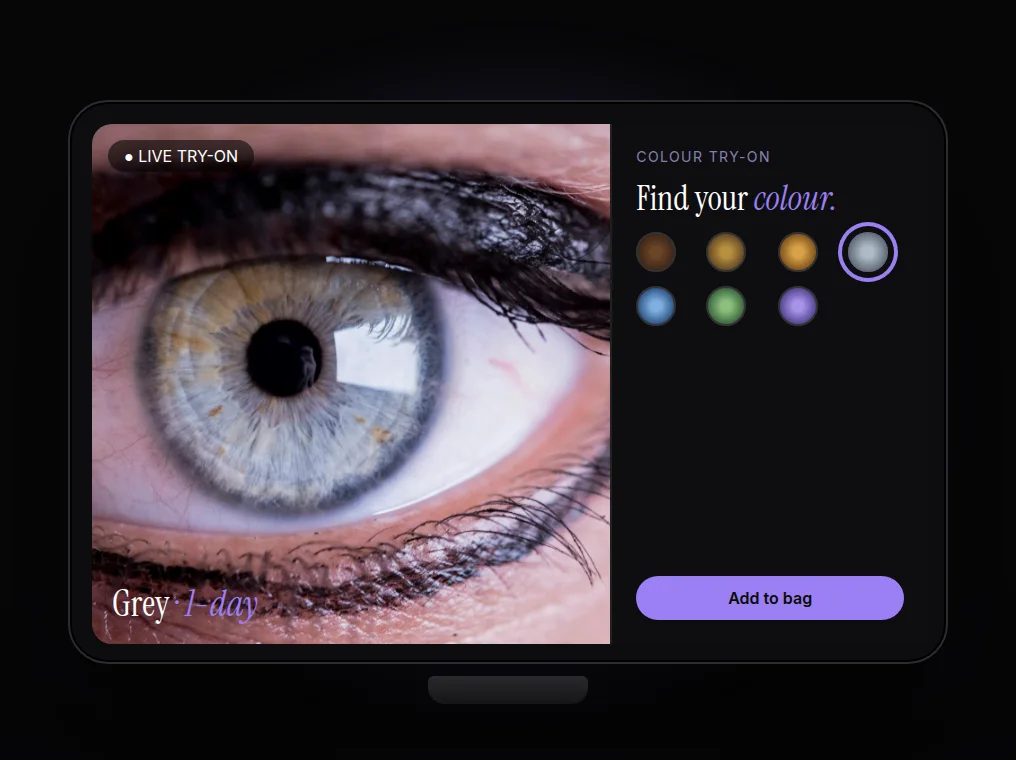
WHAT IT DOES
Swipe between shades and see them on your own eyes, one after another.
WHY IT’S DESIGNED THIS WAY
Choosing is a comparison, so the screen is built for switching fast, not for reading product details.
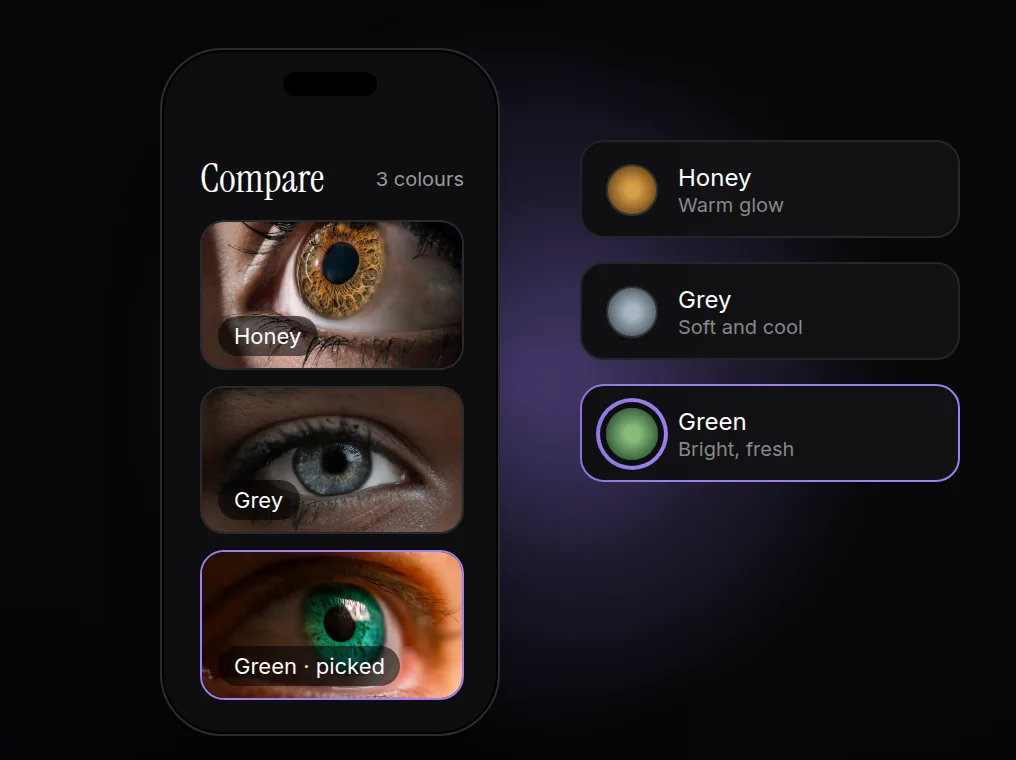
WHAT IT DOES
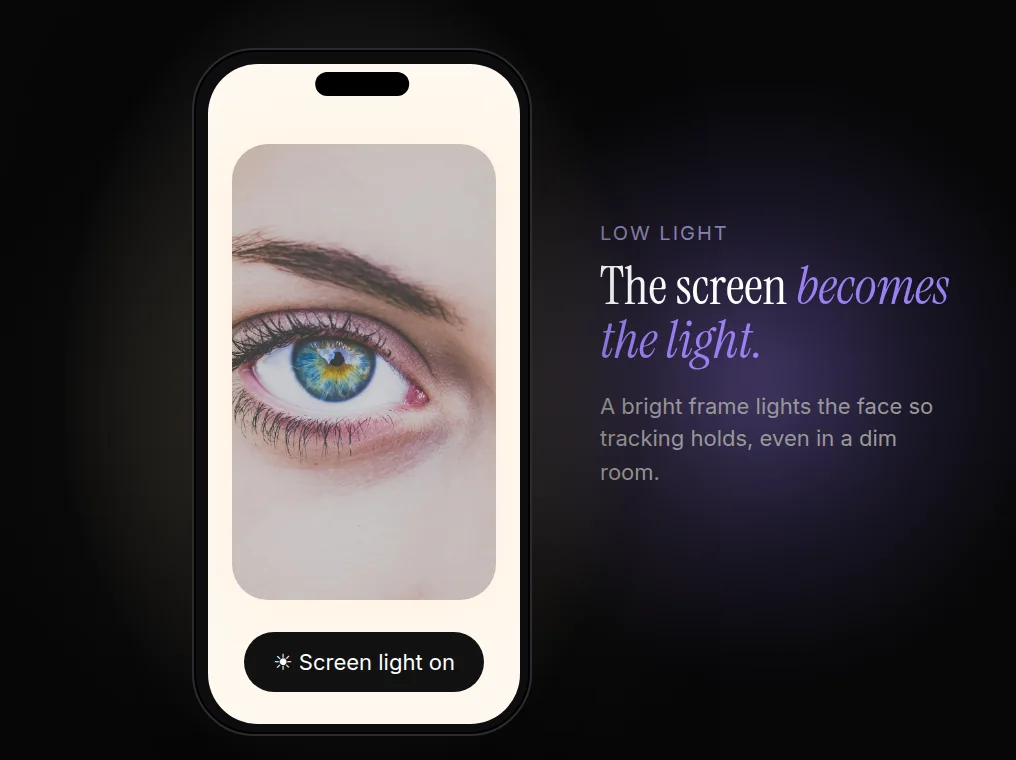
The same try-on on the shopper’s own phone, with the screen lighting the face in dark places.
WHY IT’S DESIGNED THIS WAY
Low light broke the tracking. Using the screen as a light source fixed it without extra hardware, much like the screen flash phones use for selfies today.
IMPACT
We piloted in five stores in China and saw a 55% sales lift. Alcon then rolled it out to every outlet, and its share of the coloured lens market grew from 4% to 12%. The bigger change was the idea itself: AR turned a product listing into a way to buy with confidence.
WHAT I’D TELL ANOTHER DESIGNER
